Back to Blog
The Timeless Elegance of a Handwoven Banarasi Saree
A closer look at the craftsmanship, motifs, and centuries-old tradition behind every Banarasi drape.
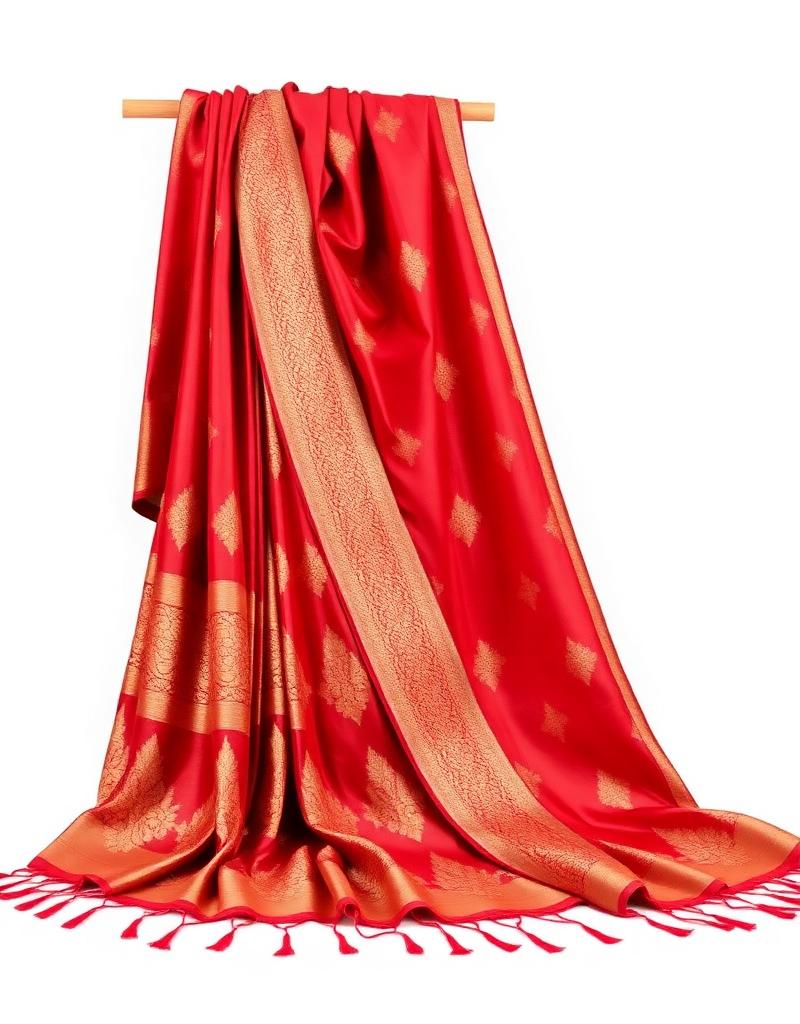
What sets a Banarasi apart is the intricacy of its motifs. Floral kalga and bel, leaf-like jhallar borders, and mughal-inspired buttis are woven into the fabric in a way that catches light differently from every angle. The result is a saree that looks alive — shimmering softly with the smallest movement.
Styling a Banarasi is surprisingly versatile. Drape it traditionally with a heavy maang tikka for a wedding, or pair the pallu with a fitted shirt and statement earrings for an evening occasion. Either way, it carries presence.
Caring for a Banarasi is gentle work. Always store it folded inside a soft muslin cloth, refold every few months to prevent creases from setting in the zari, and steam (never iron directly) before each wear.
When you wear a Banarasi, you wear the patience of a craftsman, the legacy of a city, and a story that has been told for over five hundred years.