Back to Blog
Banarasi or Kanjivaram: How to Tell the Difference
Two of India's most loved silks, side by side — origin, weave, motifs, weight and when to wear each.
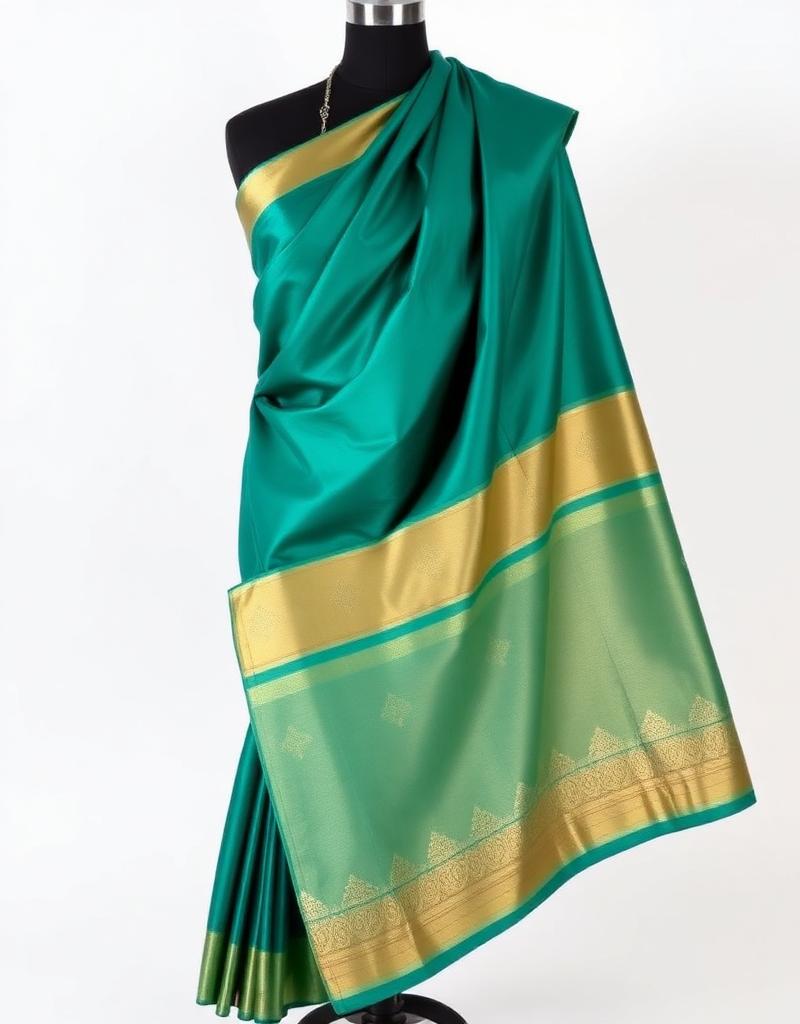
The simplest difference is geography. Banarasi silk comes from Varanasi in the north, shaped by centuries of Mughal influence. Kanjivaram comes from Kanchipuram in Tamil Nadu, rooted in temple traditions of the south.
Look next at the weave. A Kanjivaram is woven in three separate parts — body, border and pallu — which are then interlocked so firmly that the join can survive the saree itself. That join, called korvai, is the surest sign you are holding a genuine Kanjivaram. A Banarasi, by contrast, is woven as one continuous piece with the zari worked into the body.
The motifs tell on themselves too. Banarasi designs lean Persian: florals, vines, kalga and bel, delicate jaal patterns. Kanjivaram speaks in temple language: broad solid borders, checks, stripes, peacocks, mangoes and yaali figures drawn from Dravidian architecture.
Weight is the giveaway you can feel. Kanjivaram silk is thicker and heavier, holding its shape and standing away from the body. Banarasi is comparatively lighter and drapes closer, falling in softer folds.
Which to choose? For a South Indian wedding, muhurtham or temple occasion, a Kanjivaram is unmatched. For a reception, sangeet or North Indian ceremony, the shimmer of a Banarasi is hard to beat. Buy either well and you are not buying an outfit — you are starting an heirloom.